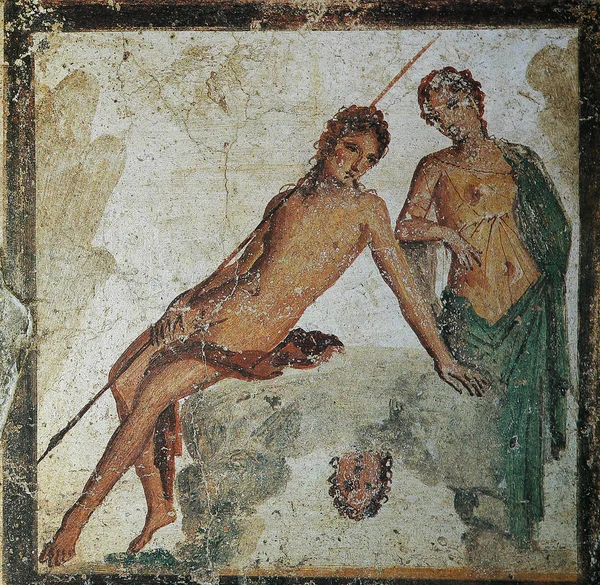
Pompeii, the ancient Roman city entombed by the eruption of Mount Vesuvius in 79 AD, stands as a global marvel with its remarkably preserved ruins. Within the vast offerings of this UNESCO World Heritage Site, some of the most captivating artifacts are the explicit sex frescoes portraying the intimate and sensual dimensions of life in ancient Pompeii. These erotic artworks serve as a unique window into the sexual attitudes and practices of this ancient civilization, offering an intimate glimpse into a world that thrived over two millennia ago.

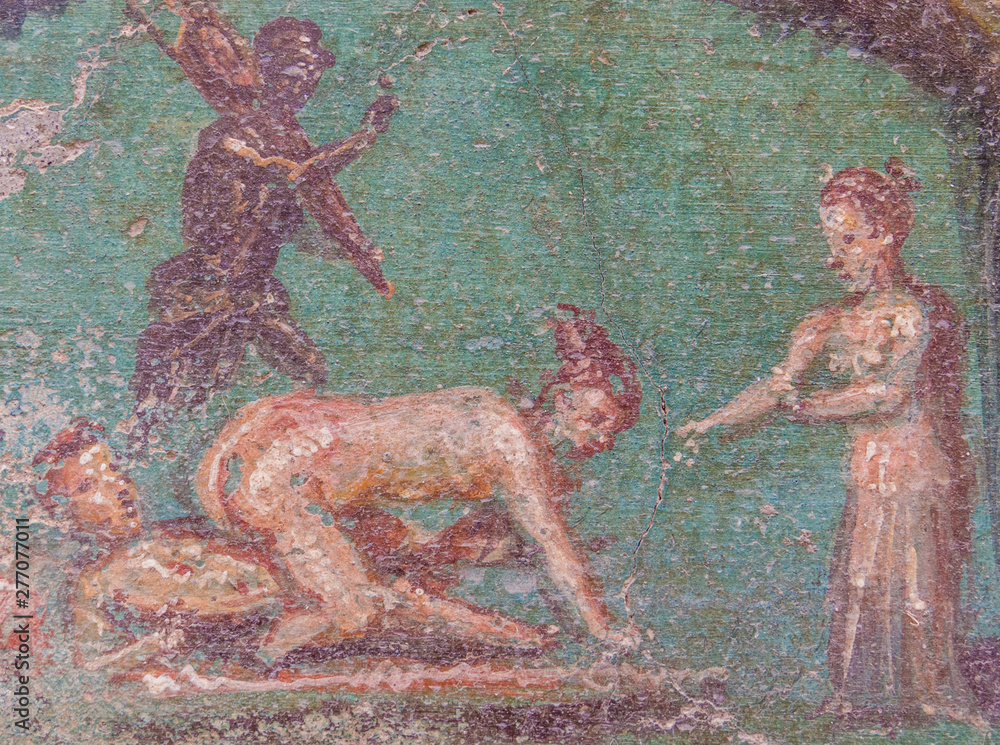
The House of the Vettii, a meticulously preserved Roman villa in Pompeii, houses one of the most famous collections of erotic frescoes. This residence showcases explicit depictions of various sexual acts and positions, offering valuable insights into the erotic tastes and preferences of Pompeii’s elite during the Roman era.
Another notable location for explicit frescoes is the Lupanar, or brothel, in Pompeii. The paintings here provide a captivating glimpse into the world of ancient prostitution, revealing details about the services offered, pricing, and even the names of some of the women who worked there.
Beyond these specific locations, Pompeii reveals erotic depictions in everyday settings. From cheeky phallic symbols on street signs to subtle erotic motifs on pottery and household items, the city’s everyday elements suggest that erotic art was not confined to certain spaces like brothels and private villas but was woven into the fabric of daily life.
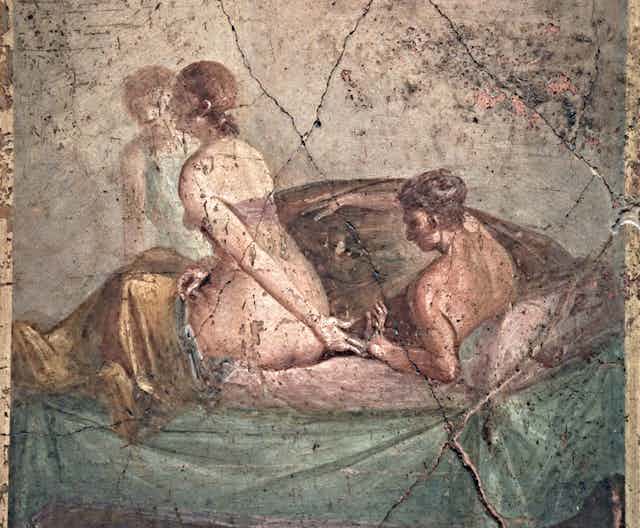
The purpose of Pompeii’s erotic frescoes remains a subject of speculation. These explicit artworks might have served various functions, acting as a source of entertainment, providing titillation, or even functioning as a form of instruction. Some scholars contend that these paintings were crafted to promote sexual education or guide young men through the intricacies of intimate relationships.
.